

 |
 |
 |
 |
 |
 |
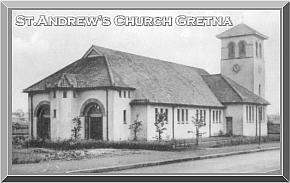
Gretna TownshipGretna township was founded in 1915 and is now a famous example of town planning history. Gretna was the first new town to be sponsored by the government in Britain and was built to house munition workers from the nearby cordite factory, built at the same time Gretna was used as a proving ground for a number of social experiments and is an example of the work of two men, David Lloyd George, the then Minister of Munitions and Raymond Unwin who was responsible for the great housing drive in the 1920's. Gretna lies to the west of the Glasgow Carlisle trunk road, now upgraded to motorway, at its junction with the A75 which leads to the lovely countryside of Galloway to the West. The Township is served with an hourly bus service to Dumfries and Carlisle with frequent connections to larger centres. It is an ideal Touring Centre with first class facilities and within easy reach of many interesting and beautiful attractions. The Railway Station at Gretna Green is now reopened. |
| © GretnaWeddings.com,
2000-2010 + part of www.gretnaweddings.com Other sites to visit: Gretna Green Scotland | Gretna Green Wedding Services | Gretna Green Webcam |
 The
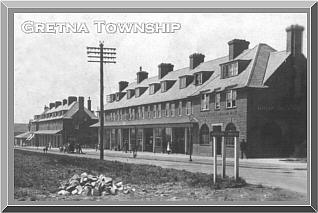
first sod was cut in Gretna in August 1915 and the work of construction
as planned, was completed in late 1917. It was built as a complete
self contained community having its own police force (male and female)
Fire Service, Power Station, Hospital, School, Laundry, shops, offices,
halls, clubs, and recreational facilities. All houses and buildings
had running water, mains drainage, a bath and wired for electric
lighting. All roads in the township had electric street lighting.
The
first sod was cut in Gretna in August 1915 and the work of construction
as planned, was completed in late 1917. It was built as a complete
self contained community having its own police force (male and female)
Fire Service, Power Station, Hospital, School, Laundry, shops, offices,
halls, clubs, and recreational facilities. All houses and buildings
had running water, mains drainage, a bath and wired for electric
lighting. All roads in the township had electric street lighting.